


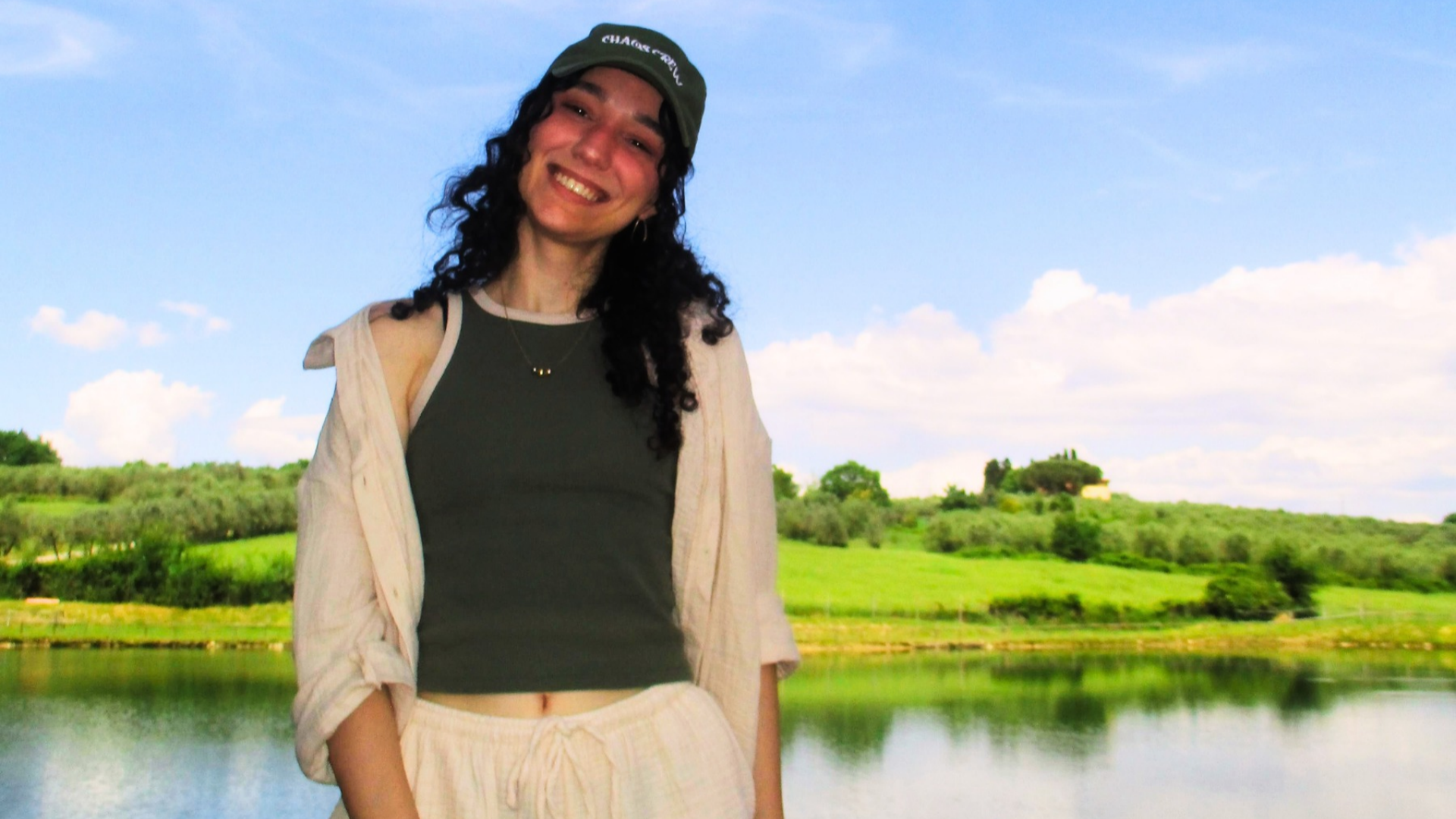
Over the last few days, new participants have been arriving in Loppiano to attend the formation schools for young people, families, priests, religious and Focolare members. Most of them will stay until the end of June 2027. But what sort of experience do the participants have at one of these schools? Ana Clara Rodrigues Schmidt is 27 years old, works as a translator and lives in São Paulo, Brazil. She attended the Gen School, the Focolare Movement’s school for young people, just last year. A few months ago, she shared this adventure on LinkedIn, highlighting how important it had been for her career as a translator. So, we wrote to her, asking her to tell us the rest of the story as well.
When I saw the first sign saying ‘Loppiano’, I had a strange feeling: I was arriving in a completely unfamiliar place and, at the same time, it felt like coming home. It took me a while to understand what that feeling really meant, because the truth is that I didn’t love Loppiano straight away. I had to learn to love it.
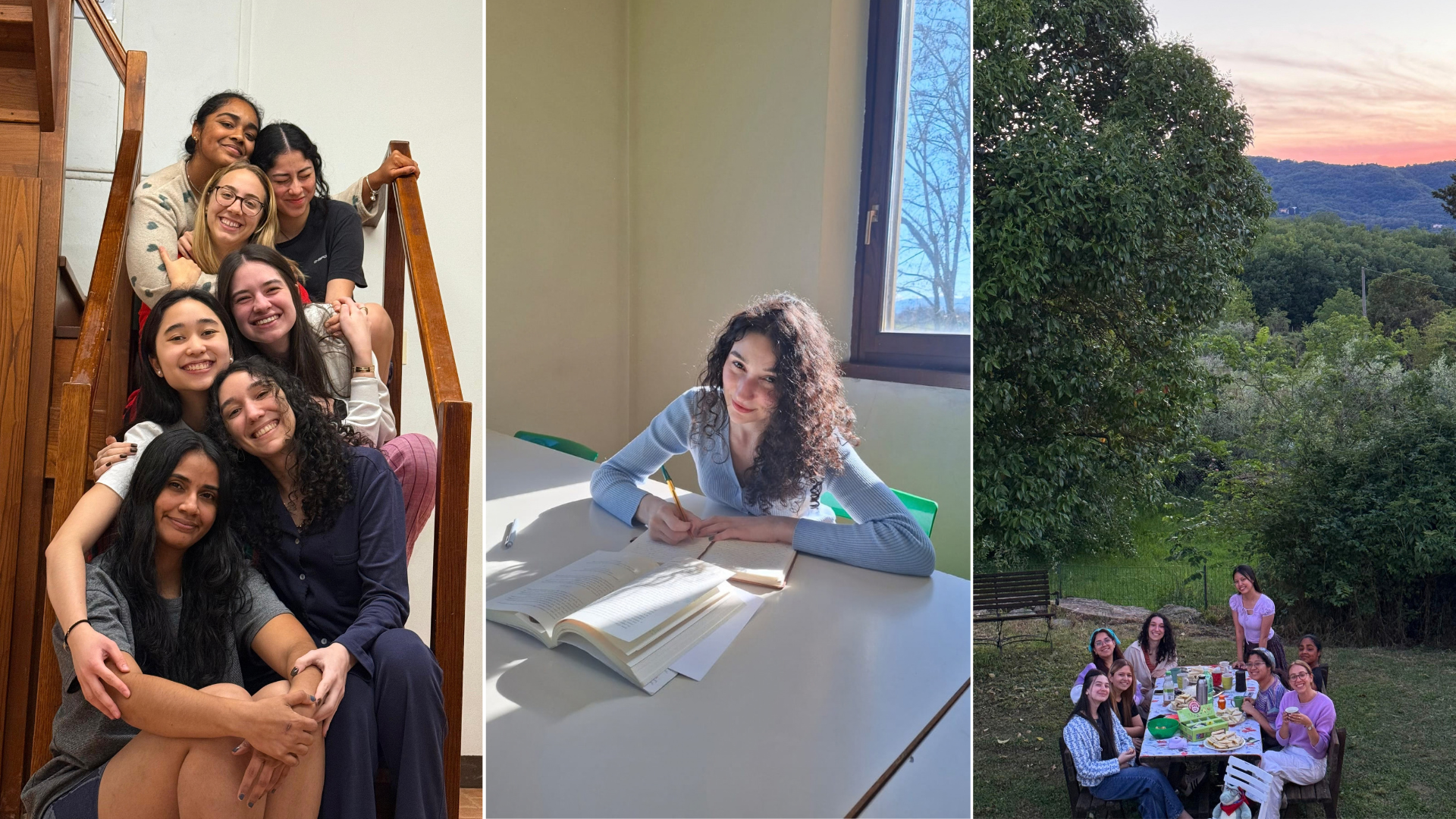
I’m from São Paulo, the largest and most populous city in Brazil. I’d always been used to the chaos of the big city and tried to lead a quiet life amidst that chaos. And it was all very convenient, too. In Loppiano, I found myself far from chemists, supermarkets, public transport – everything I was used to having close at hand. At first, that isolation drove me mad. Then, little by little, I began to appreciate the sunset after an afternoon’s work at Conto Terzi, I began to walk more, to look up at the sky. And, at the same time, I began to realise that that home I was building wasn’t just a place. Home became a girl from the Youth Project who, right from the very first days, offered me a safe place where I could feel completely welcomed. Home became my flatmates and my whole daily life: from working out who was cooking or cleaning to moments of sharing happiness, difficulties and moments of madness.
At home, being together often meant problems, complaints and arguments. I really thought I’d live alone for the rest of my life, that I simply wasn’t cut out to live with other people. I needed a lot of space to be on my own. In Loppiano, I was always surrounded by people, even in my own room. However, I discovered that living together doesn’t necessarily mean conflict. That different people can build a community together. And to build this, we also had to find a way to understand one another.
I’d started learning Italian shortly before leaving Brazil and could understand quite a bit, but I couldn’t really communicate. At first, I’d switch between Italian, English, Spanish and Portuguese, trying to build bridges between people who still couldn’t understand one another very well. Then, without realising it, we began to live in Italian. And by living in Italian, I also began to truly get to know the many different communities that made up Loppiano.
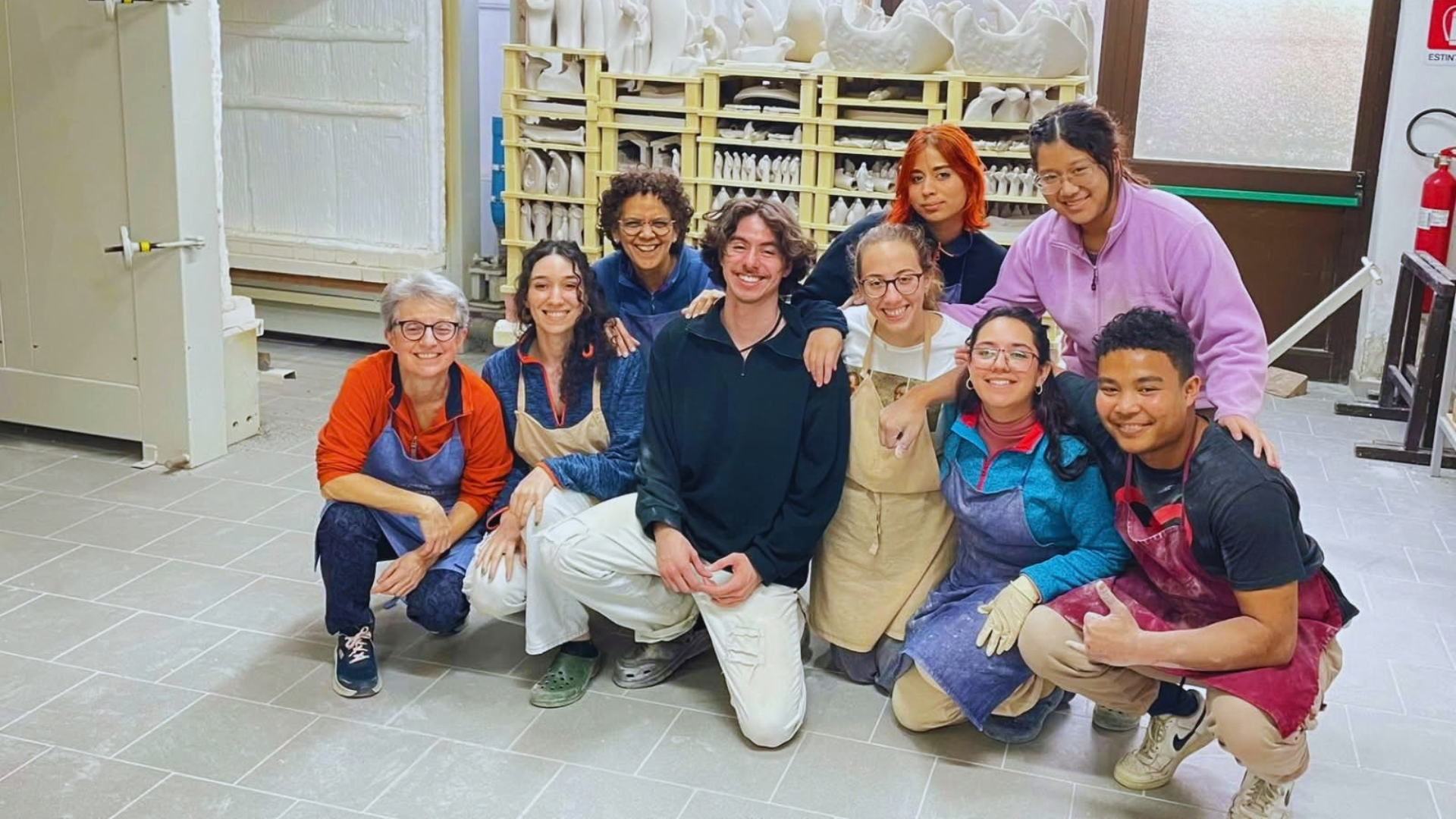
Work was an important part of this journey. I moved from Conto Terzi, where people from different parts of Loppiano worked together, to Ceramica Centro Ave, where I found a little family.
There, my work was mainly about the details. I spent hours and hours on my much-loved ‘Aurora’ (a depiction of the Holy Family), smoothing out the marks left by the moulds, reconstructing small details and preparing each piece for the next stage. It was work that anyone seeing the finished product would probably never have noticed, but which was essential for that product to exist in that form. At the Gen School, I used to write. A lot. I filled notebooks with the various lessons, questions and reflections. Above all, reflections. I returned to Brazil with three and a half notebooks completely filled with notes and another one and a half notebooks of reflections.
I organised and ran events; sang during Masses and met people I would probably never have met had I stayed in my little corner of the world.
Among all those pages, there is one that holds a special meaning for me today. In February, during a workshop, I’d tried for the first time to put down in writing what I was experiencing. At the time, I’d concluded my account by saying that Loppiano had been, and continued to be, “movement in the most unexpected form possible”.
It makes me smile to read it today. Because back then I didn’t yet know how many things would happen in the months that followed. I hadn’t yet met all the people who would become important to me. I hadn’t yet filled those notebooks, spent so many hours with the *Aurora*, sung Tananai’s ‘Tango’ on endless repeat, organised May Day and so many other activities, nor experienced all those conversations, dinners, difficulties, laughs and little everyday moments that I now immediately associate with Loppiano.
Perhaps the thing I couldn’t quite grasp at the time was that that ‘movement’ wasn’t taking me in the direction I’d imagined.
I set off from Brazil thinking above all about my personal, individual growth. And yes, I’ve grown a great deal as a person, but I’ve realised that being independent doesn’t necessarily mean doing everything on my own.
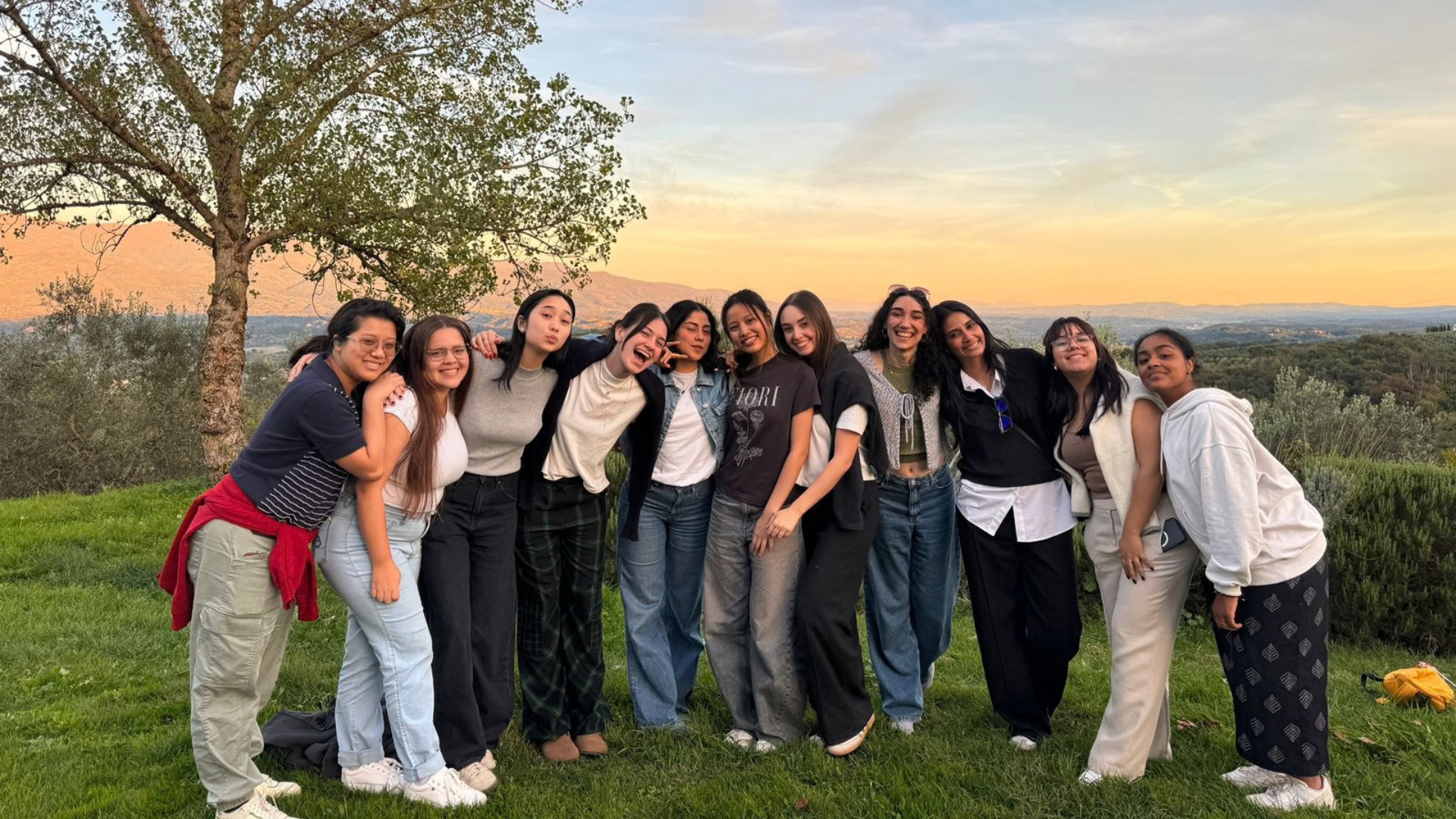
I arrived knowing almost no one, and nine months later, I found myself having to say goodbye to a home built together with people from so many different corners of the world. During our last evening in Loppiano, we chose a flame as our symbol: everything we had received through our encounters, friendships, challenges, discoveries and the mutual love we had experienced together. Each of us would take a part of it with us.
Today, on the other side of the ocean, I think I understand that symbol a little better.
Nine months earlier, I’d arrived in Loppiano without having slept, still unable to communicate properly in Italian and with no idea what lay ahead. At four in the morning, nine months later, I set off again whilst almost everyone was asleep. I closed the door without waking anyone and set off for the last time along that road which, on my arrival, had seemed so unfamiliar.
This time, however, I knew exactly where I was setting off from.
I am deeply grateful to all the people who welcomed me, supported me, taught me something, challenged me, listened to me, made me laugh and shared a part of their lives with me. To the Gen School, Ceramica Centro Ave and the whole of Loppiano, thank you for everything you have given me over these nine months and, above all, for having lived them alongside me.
I arrived in Loppiano thinking I had to learn to stand on my own two feet in the world.
I left knowing that wasn’t the most important question.
Ana Clara Rodrigues Schmidt